How KITE-Ai Corrected Sample Size Planning in a Vaccine Non-Inferiority Study
The challenge
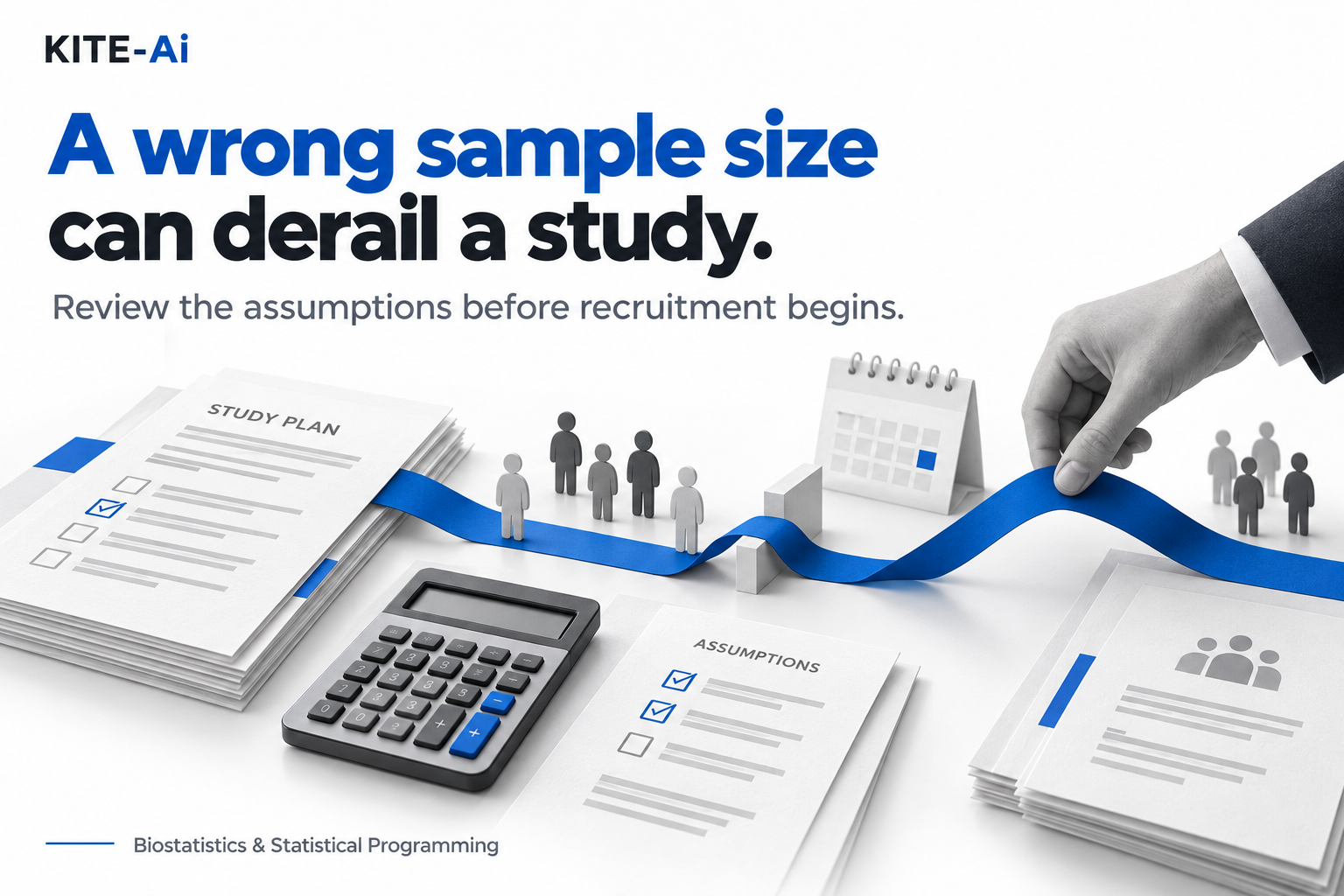
A wrong sample size calculation can derail an otherwise well-designed study. Too few evaluable participants can leave the primary analysis without the planned statistical power. An unnecessarily large recruitment target can increase site workloads, extend recruitment and expose additional participants to study procedures.
KITE-Ai independently reviewed the statistical planning for a paediatric vaccine non-inferiority study and identified an error in a sample size calculation prepared by another service provider.
The study assessed immunogenicity through seroconversion, with a primary comparison following completion of the vaccination regimen. The sponsor needed the recruitment requirement and primary analysis approach to support the same statistical objective.
An independent statistical review helped the sponsor avoid unnecessary enrolment, save time and reduce overall study costs.
The statistical review
Reassessing the calculation and its assumptions
KITE-Ai revisited the expected response assumptions, non-inferiority margin, significance level, target power and treatment allocation underpinning the calculation.
The purpose was to establish a defensible recruitment requirement. A sample size must be justified by the intended endpoint and comparison, rather than accepted simply because a calculation has already been supplied.
Recommendation Time
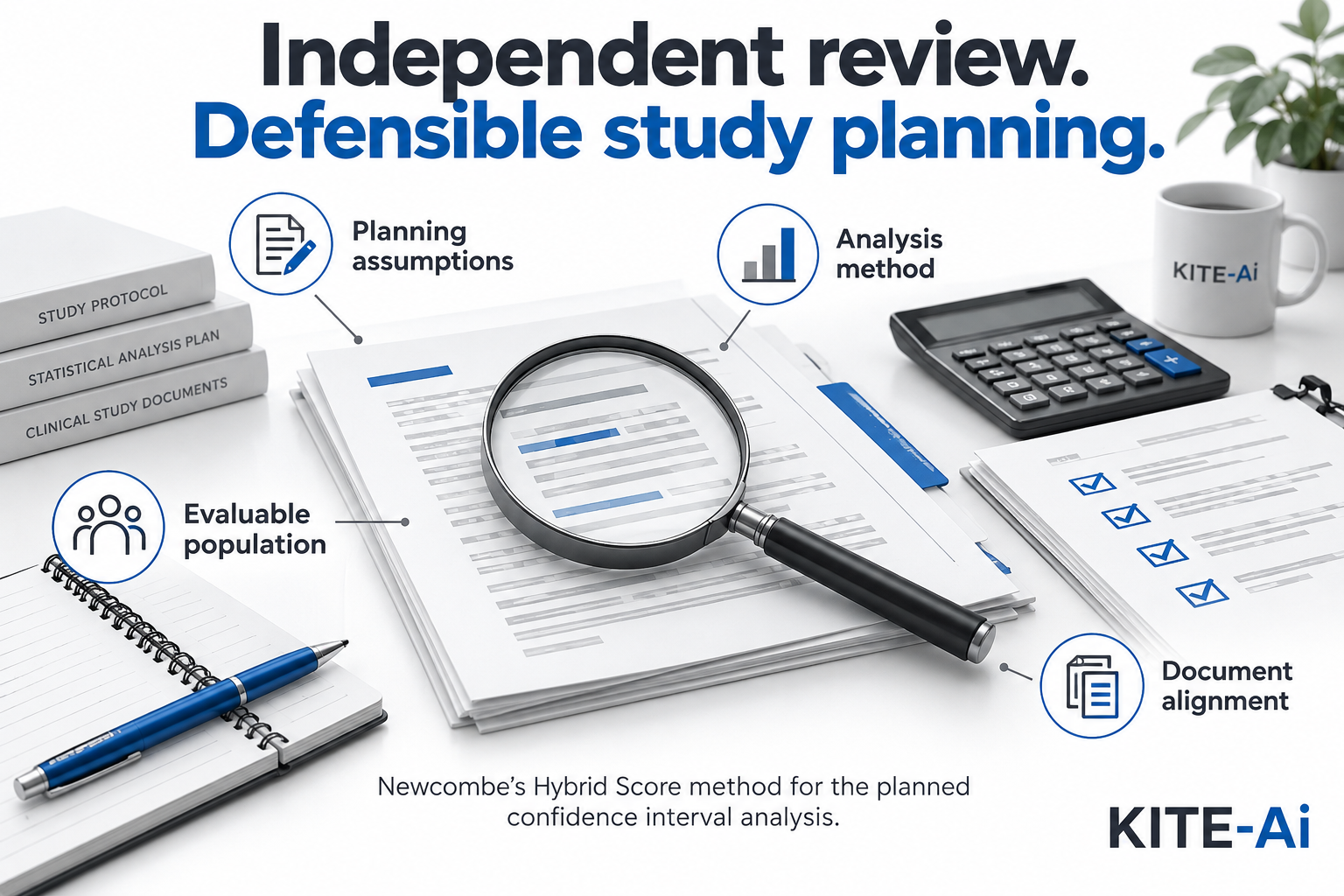
The analysis required consistent specification of the treatment contrast, confidence interval and non-inferiority decision rule. These details connect the statistical method to the conclusion the study is designed to support.
The method recommendation formed part of the broader statistical review. Sample size planning also required its own reproducible justification using the agreed assumptions.
The number of participants randomized does not automatically equal the number contributing to the primary immunogenicity analysis.
Baseline serostatus, missing post-vaccination assessments, study completion requirements and major protocol deviations can affect eligibility for the per-protocol population. KITE-Ai’s review addressed the recruitment requirement alongside the allowance for non-evaluable participants.
This distinction helped connect operational recruitment planning with the population intended for the primary analysis.

The review also addressed consistency between sample size planning and the study’s non-inferiority objective.
The calculation rationale, endpoint definition, analysis population and confidence interval decision rule needed to form a coherent statistical plan. Clear documentation provides the basis for subsequent programming, quality control and interpretation.
The sponsor outcome
The lesson for clinical development teams
An independent statistical review can identify planning errors before they become expensive operational commitments.
The review should examine the calculation, its assumptions, the expected evaluable population and the planned analysis method together. Checking only the final recruitment number can leave important inconsistencies unresolved.
This case demonstrates how specialist biostatistical input can help a sponsor correct its study plan and make better-informed decisions about recruitment, timelines and resources.
Experienced in delivering more than 200+ studies across multiple therapeutic areas
Experience of delivering More than
200+ Studies
Under different therapeutic area
Team of experience Professionals
40+ programmers
With an average of 10+ years of experience
Building a joyful client relationship
10+ satisfied clients
Through a commitment to quality and trust.